
The Bienstaedt Watchtower
When Erfurt Was Still in the Middle Ages
The Bienstaedt Watchtower stands outside the gates of Erfurt. To be precise: it used to stand outside the gates of Erfurt. That is not because of the tower itself – it still rises on Fahner Höhe just west of Erfurt – but because of the gates: they no longer exist.
Gates and watchtower were closely connected. The gates were closed as soon as a warning signal arrived from the tower.
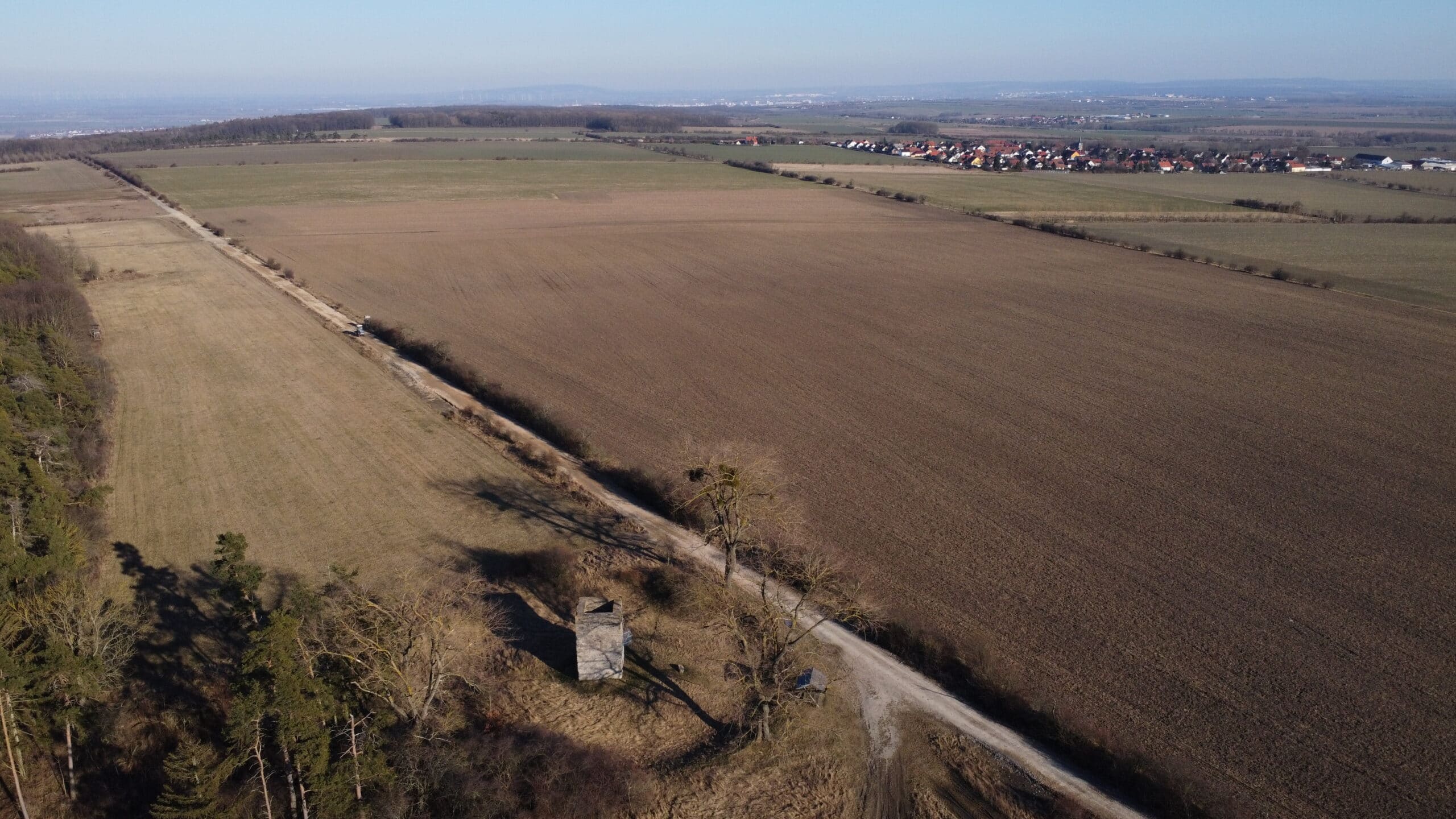
Here is how it worked: even in the Middle Ages, Erfurt lay largely in a basin-like depression. Anyone approaching the city with hostile intent would be spotted very late – perhaps too late. A city wall only offered full protection when all gates were shut and defenders were in position. Both required time. That time was gained by detecting potential attackers early. For this reason, Erfurt was once surrounded by 16 civic watchtowers from which the surrounding countryside was kept under constant observation.
Reduced to a Third of Its Height
The Bienstaedt Watchtower is first mentioned in written records in 1411.
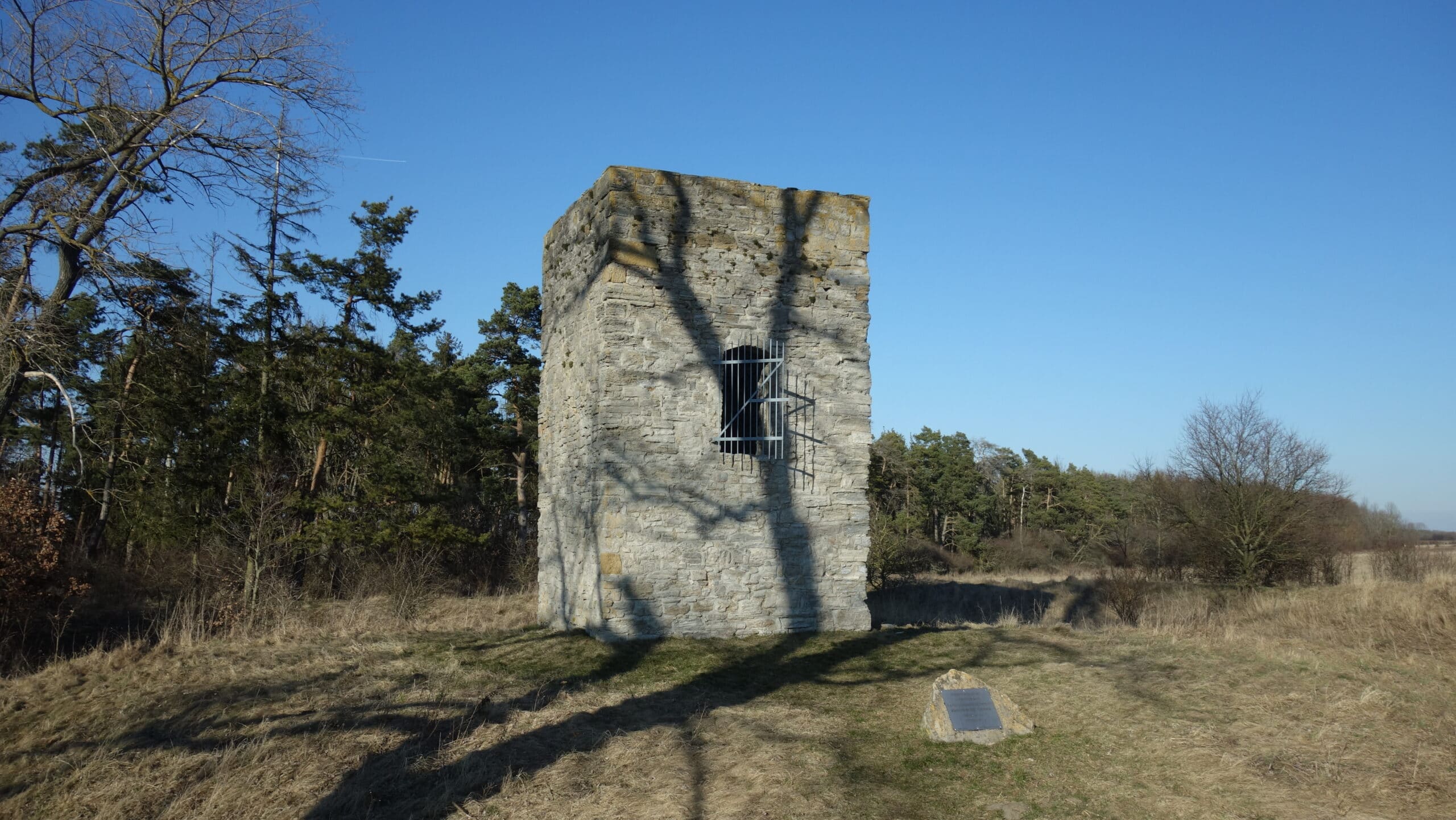
The 18-metre tower also housed a dwelling at that time, occupied by the watchman and his family – but only until the 18th century. By 1733 the tower was already documented as being in a state of decay.
What life looked like inside such a structure remains lost in the shadows of history:
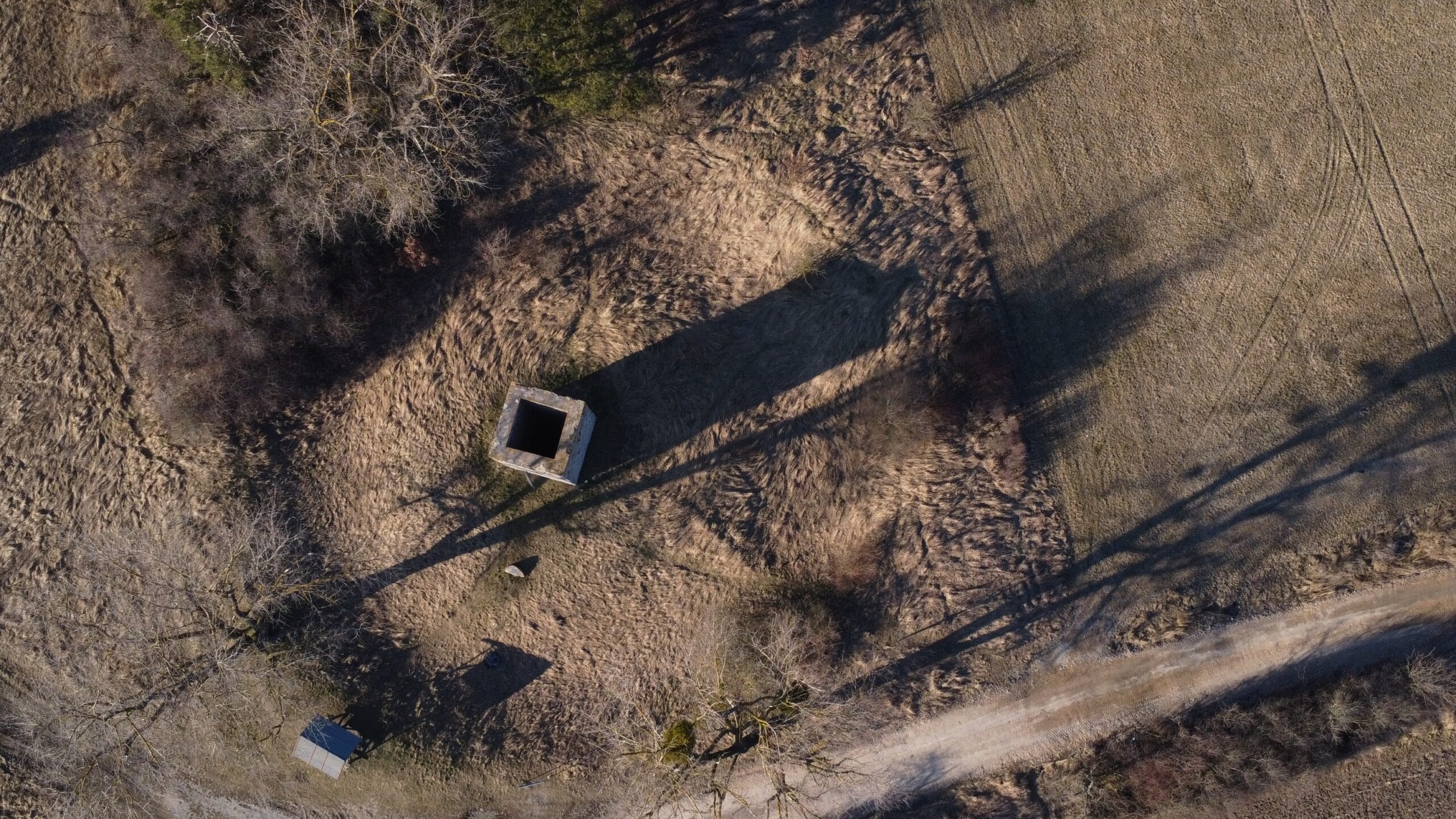
Today the tower stands at just 6 metres – roughly a third of its original height – and is a listed monument in this form. The site can be explored quickly, which makes the beautiful surrounding countryside on Fahner Höhe – or rather: just outside Erfurt – all the more inviting for further activities.
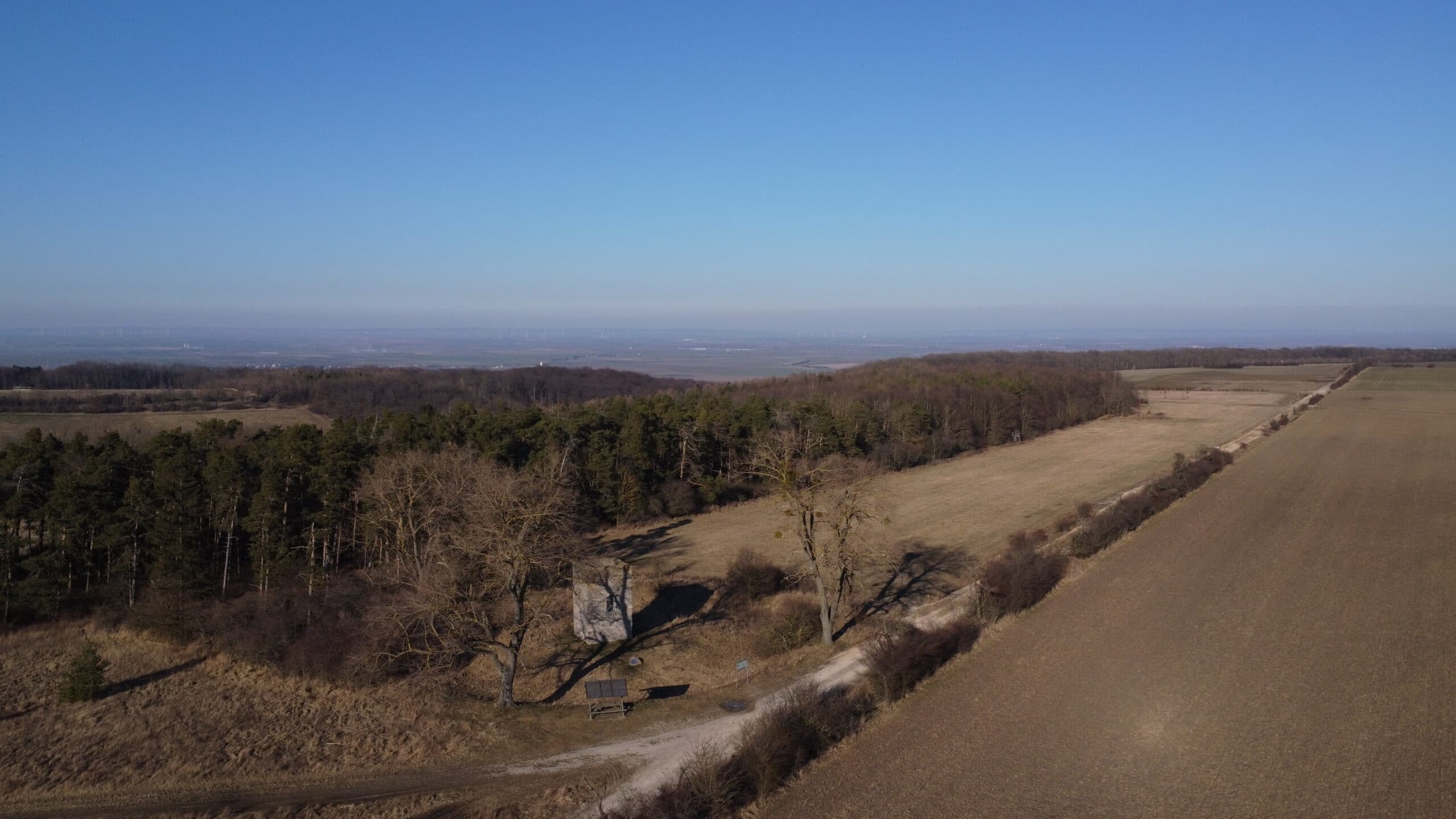
Just next door: From Stasi listening post to techno legend
Few people know that near the Bienstaedt Watchtower, the Ministry for State Security once operated a surveillance and listening station.
After reunification, the site underwent a remarkable transformation: between 1999 and 2006 the former Stasi location became a nationally recognised techno and rave hotspot. Names such as Sven Väth, Green Velvet and Dave Clarke stand for an era that briefly placed Erfurt on Germany’s electronic music map. Around 2009 that chapter closed – but those who were there have never forgotten it.