
St. Severi Church
A Quiet Look into the "Little Sister of the Cathedral"Up the Hill …
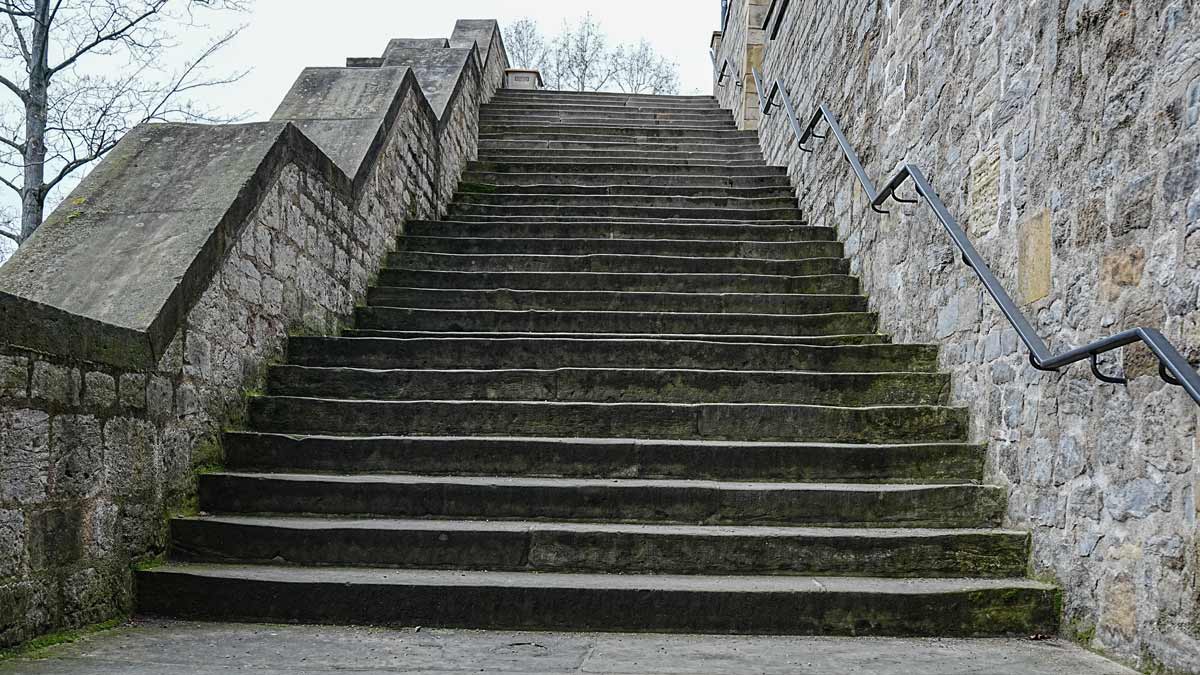
Anyone wishing to reach St. Severi Church from Domstraße must first climb a number of steps. The other approach is no easier – there you face the 70 Cathedral Steps. That is the drawback of building on a hill. The upside, however, is that the distinctive outlines of the Cathedral and St. Severi right beside it are visible from far and wide. They appear in countless illustrations and photographs. The logo of ich-liebe-erfurt.de also features this well-known silhouette.
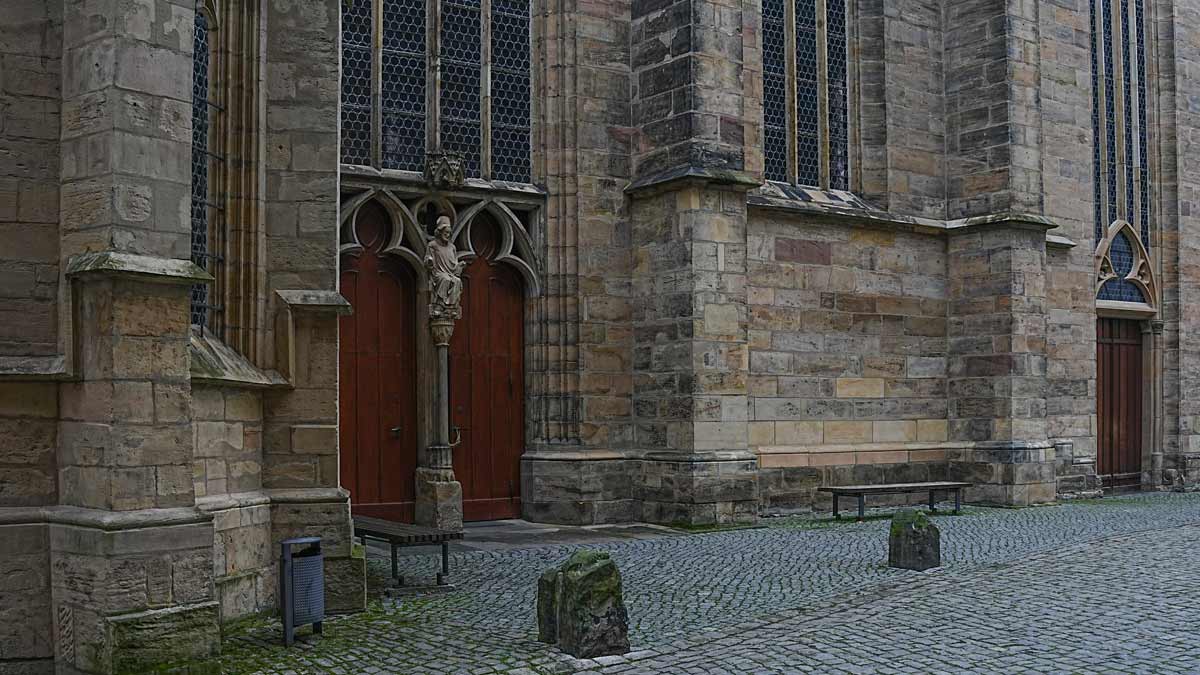
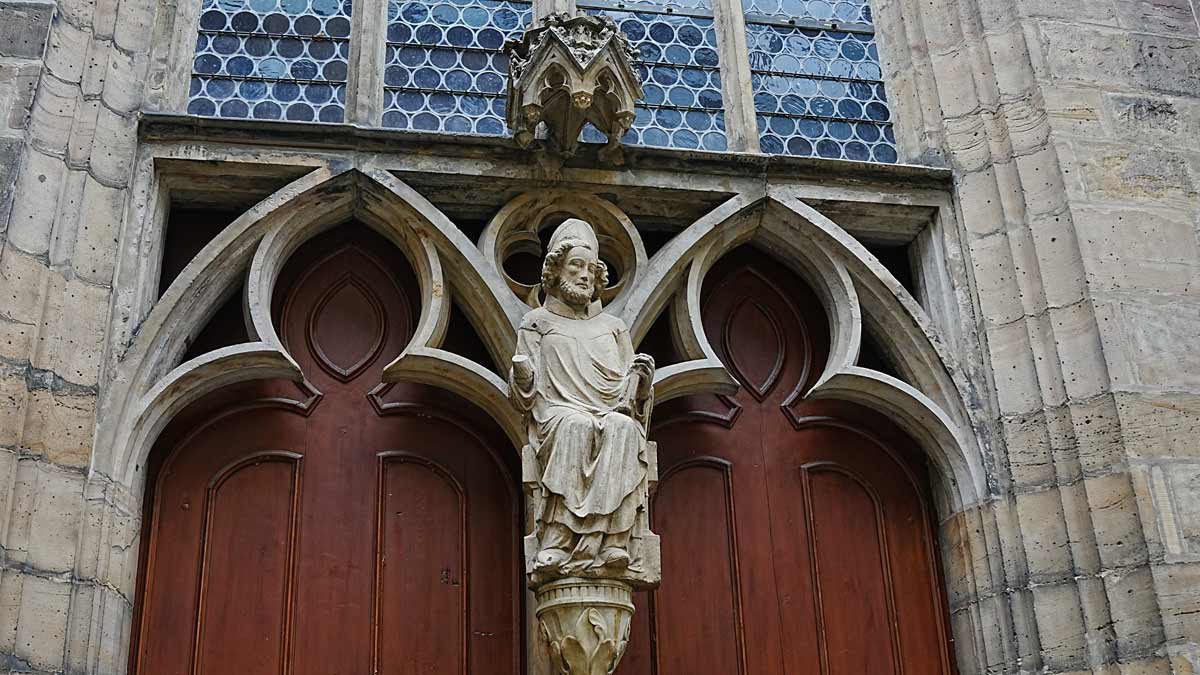
Then – right next to the all-dominating Cathedral – the southern entrance portal of St. Severi Church comes into view. A portal column divides the double-winged entrance, crowned by a stone sculpture. Since portal columns were often reserved for the patron saint of the respective church, the sculpture most likely depicts St. Severinus.
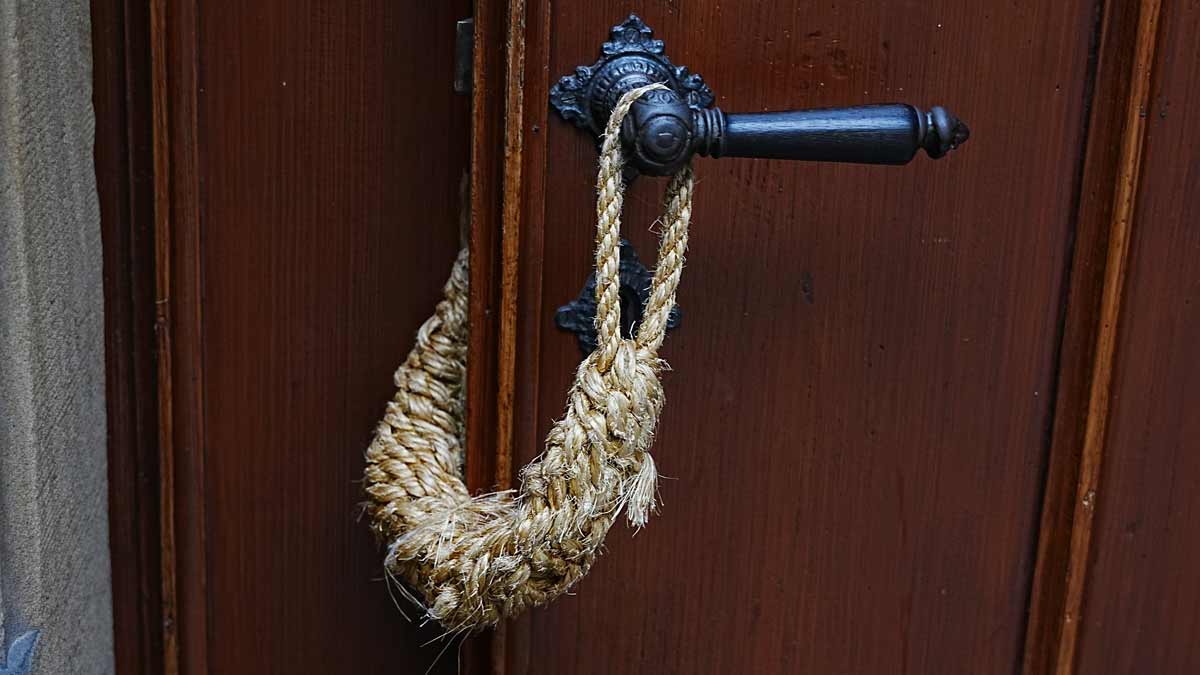
The heavy wooden portal of St. Severi Church opens gently and almost silently. A thick, artfully braided rope ensures that the door closes softly – a small but significant detail that preserves the respectful stillness of this sacred space.
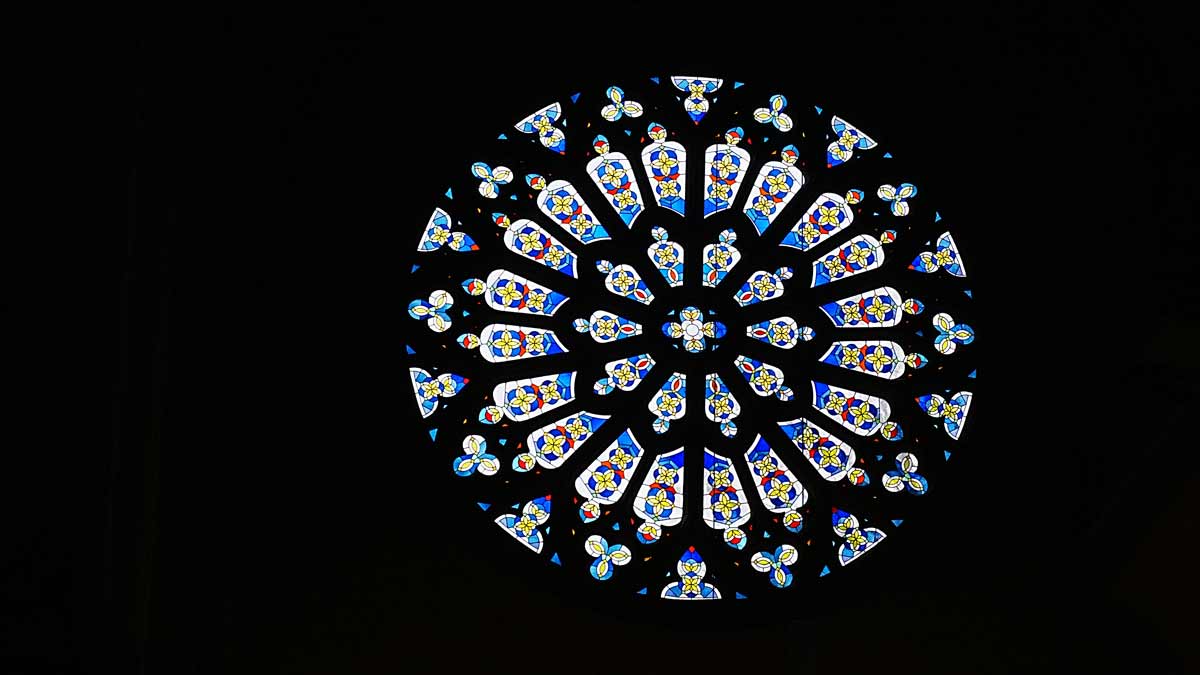
The first step inside the church feels like a journey through time: the subdued light of the late afternoon sun falls through the tall Gothic windows, bathing the space in a warm, almost mystical glow.
A Masterpiece of Gothic Architecture
St. Severi Church is no ordinary church – it is one of the few five-aisled Gothic hall churches in Germany. Its history dates back to 836, when Archbishop Otgar of Mainz had the relics of St. Severus brought to Erfurt. They initially found their home in the modest monastery church of the Benedictine convent on the Domberg. In 1123, the Benedictine nuns withdrew from the monastery there and continued their monastic life on the Cyriaxberg.
Construction of the present St. Severi Church began around 1275 and was completed around 1350. The exact date of its consecration has not been recorded. In some ways, this beautiful church always stands in the shadow of Erfurt Cathedral, which is visited by hundreds of thousands of tourists every year. Yet in terms of splendour and beauty, St. Severi is in no way inferior to its famous neighbour.
A Living Place of Worship
St. Severi Church is not a museum but a living place of faith and culture. Regular services, concerts and cultural events make it an important spiritual and cultural centre of Erfurt. Catholic services are held here on Sundays and public holidays – during these times, tourist visits are not possible.
The centuries-old walls house some remarkable treasures.
The Severi Sarcophagus – A Masterpiece of Medieval Art
In the gentle half-light, we discover the famous Severi Sarcophagus from 1365, which houses the remains of St. Severus. The four elaborately designed relief panels recount stories from the life of St. Severus with astonishing attention to detail, including a particularly impressive depiction of the Adoration of the Magi, inspired by a model in the Lorenzkirche in Nuremberg. The almost fully sculptural high reliefs bear witness to the extraordinary artistry of the so-called “Master of the Severi Sarcophagus” and make the work one of the most significant works of German sculpture from the 14th century. After a devastating fire in 1472, the sarcophagus was dismantled and the side panels were placed elsewhere in the church, until they were reunited in their current position in 1948. It was not until 1982 that the ensemble was completed with a cast of the original lid – a fascinating example of how carefully this precious testament to medieval sculpture was preserved over the centuries.
The Marian Chapel – A Place of Stillness
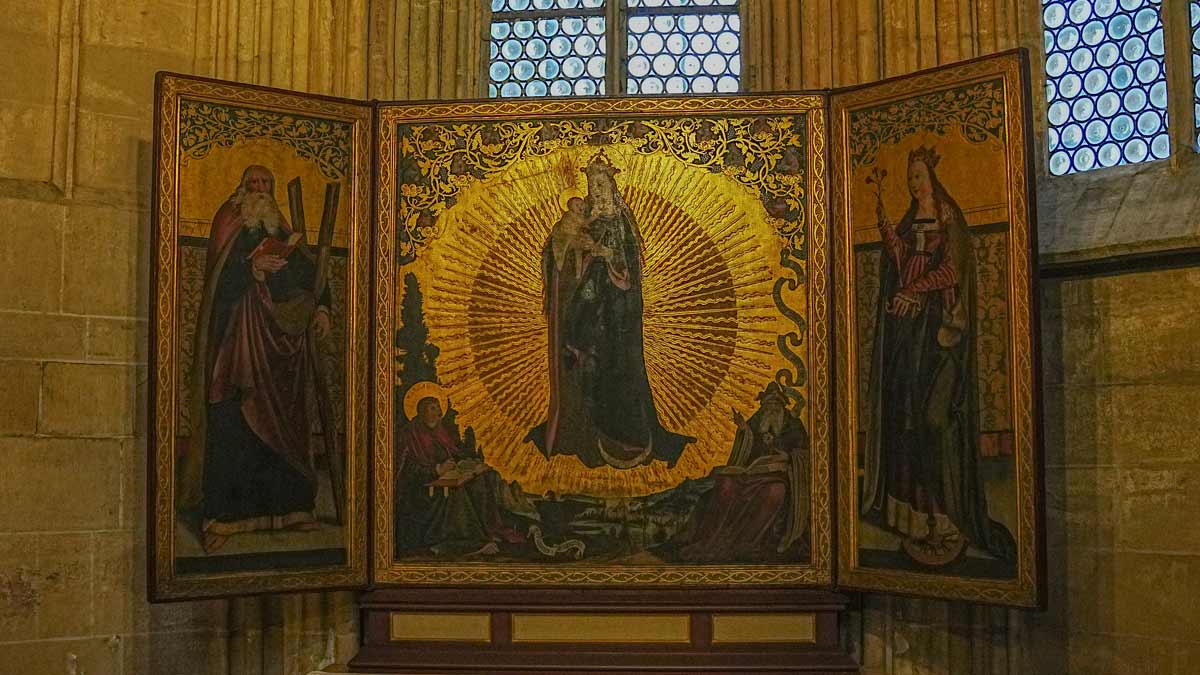
The Marian Chapel, redesigned in 2008, offers a special place of retreat. Here visitors can pause and absorb the unique atmosphere of the church. A precious stone Madonna from 1345 watches over this place of contemplation.
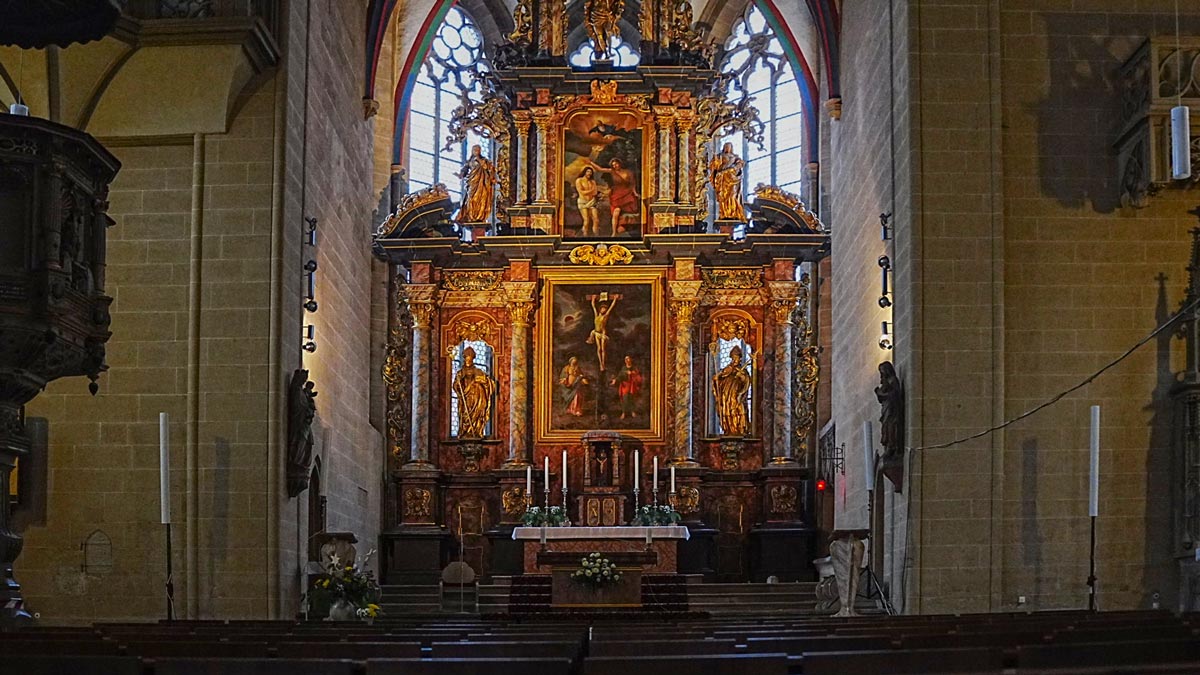
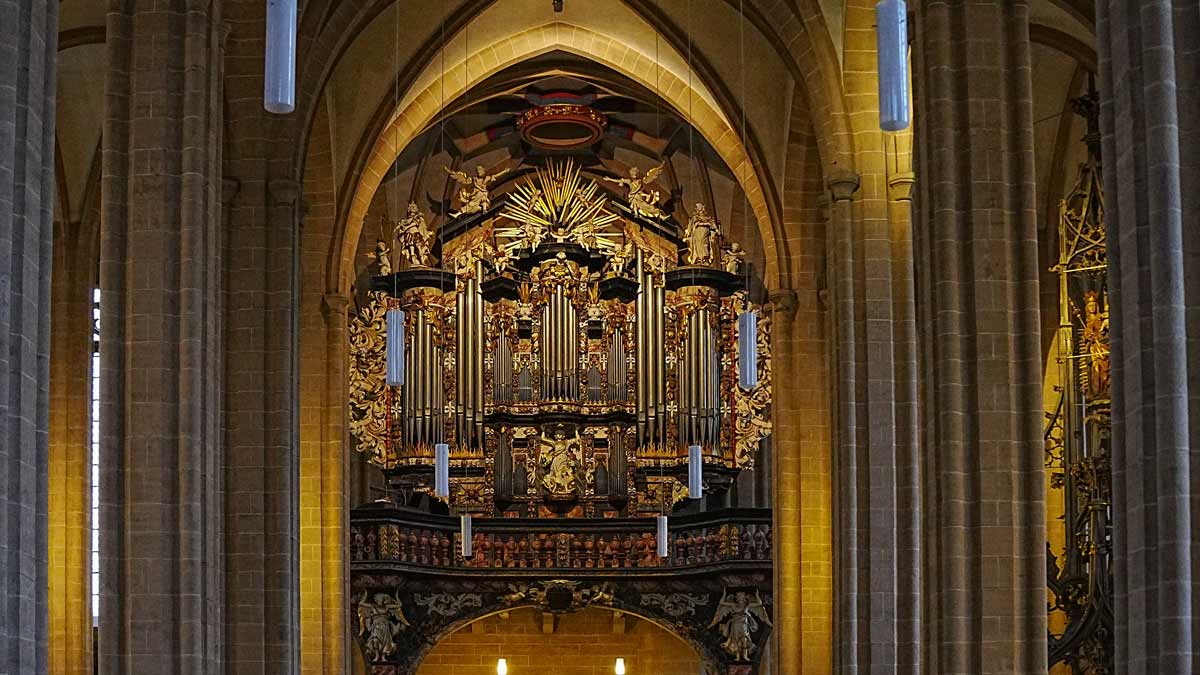
The magnificent main altar of St. Severi Church. Turning 180 degrees, the eye falls on the Klais organ from the 1930s.
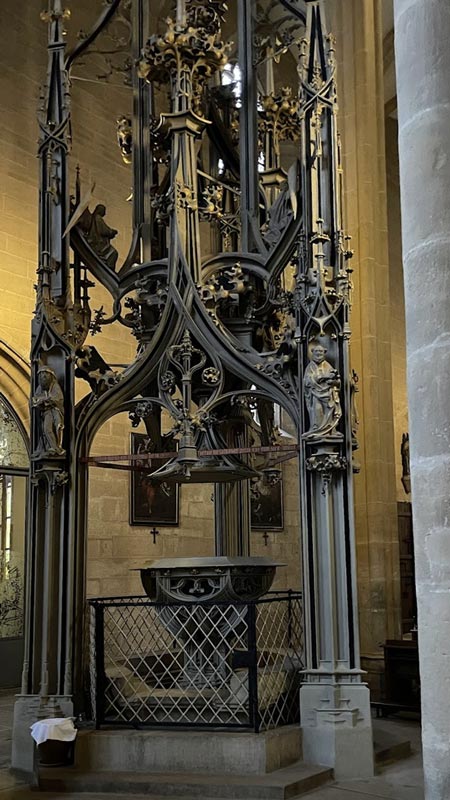
The Monumental Baptismal Font
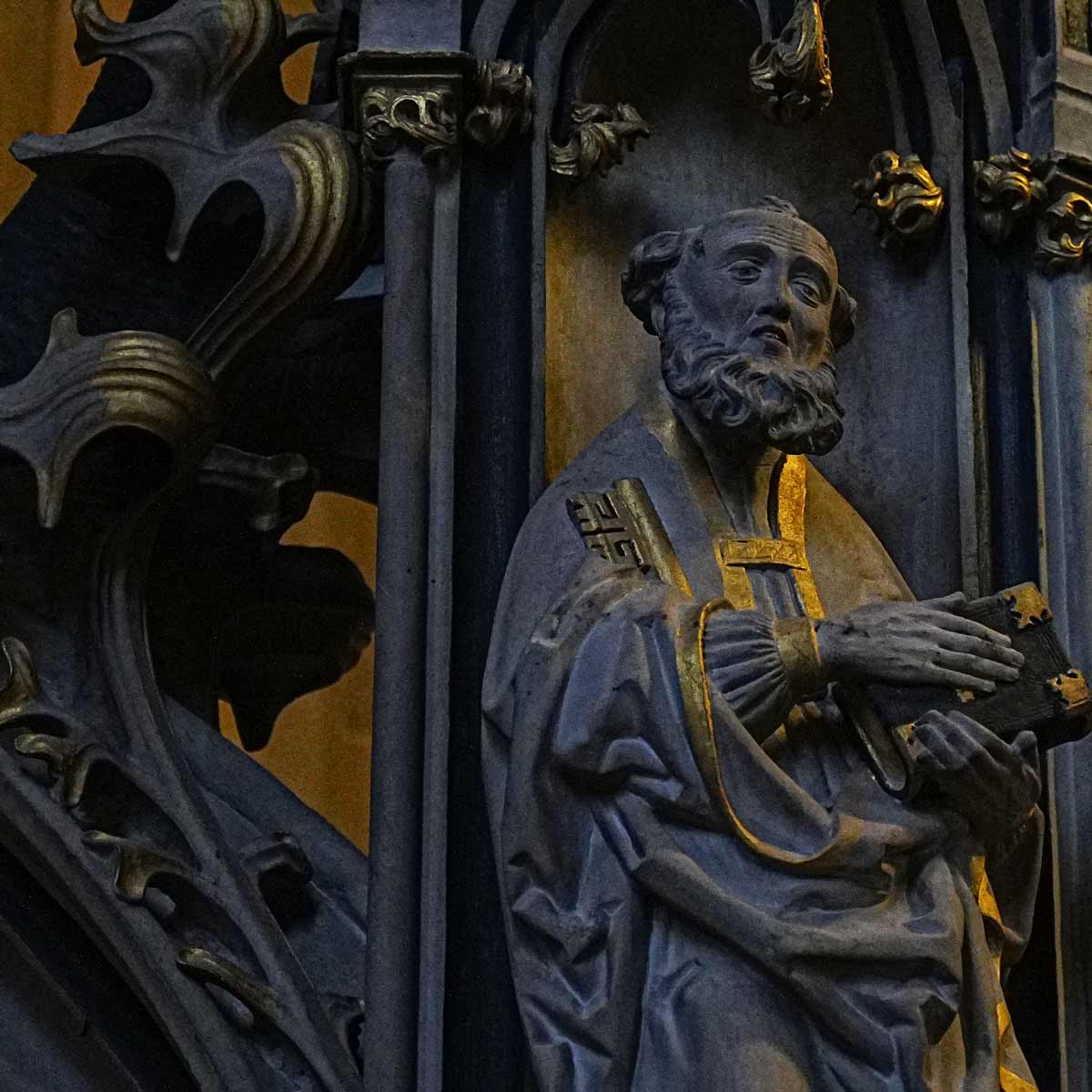
Particularly impressive is the Gothic baptismal font from 1467. At 15 metres in height, its tower-like superstructure reaches up to the vault of the church. This masterpiece of stonemasonry was donated by Canon Johann Steinberg from Duderstadt. The font rests on three slender, richly profiled pillars and features a complex iconographic programme with figures such as John the Baptist and St. Paul.
The Ensemble with Erfurt Cathedral
Together with the neighbouring Erfurt Cathedral, St. Severi Church forms a uniquely medieval ensemble that is unparalleled in the world. The two churches sit majestically above the city and are the landmark of Erfurt – even on foggy days. Following extensive restoration work between 2006 and 2009, St. Severi Church now shines in renewed splendour.
The church can be visited Monday to Saturday from 10 am to 5 pm; on Sundays, due to the church service, the doors open to tourists only from 1 pm. Admission is free. However, a donation towards the upkeep of this wonderful church is always welcome.
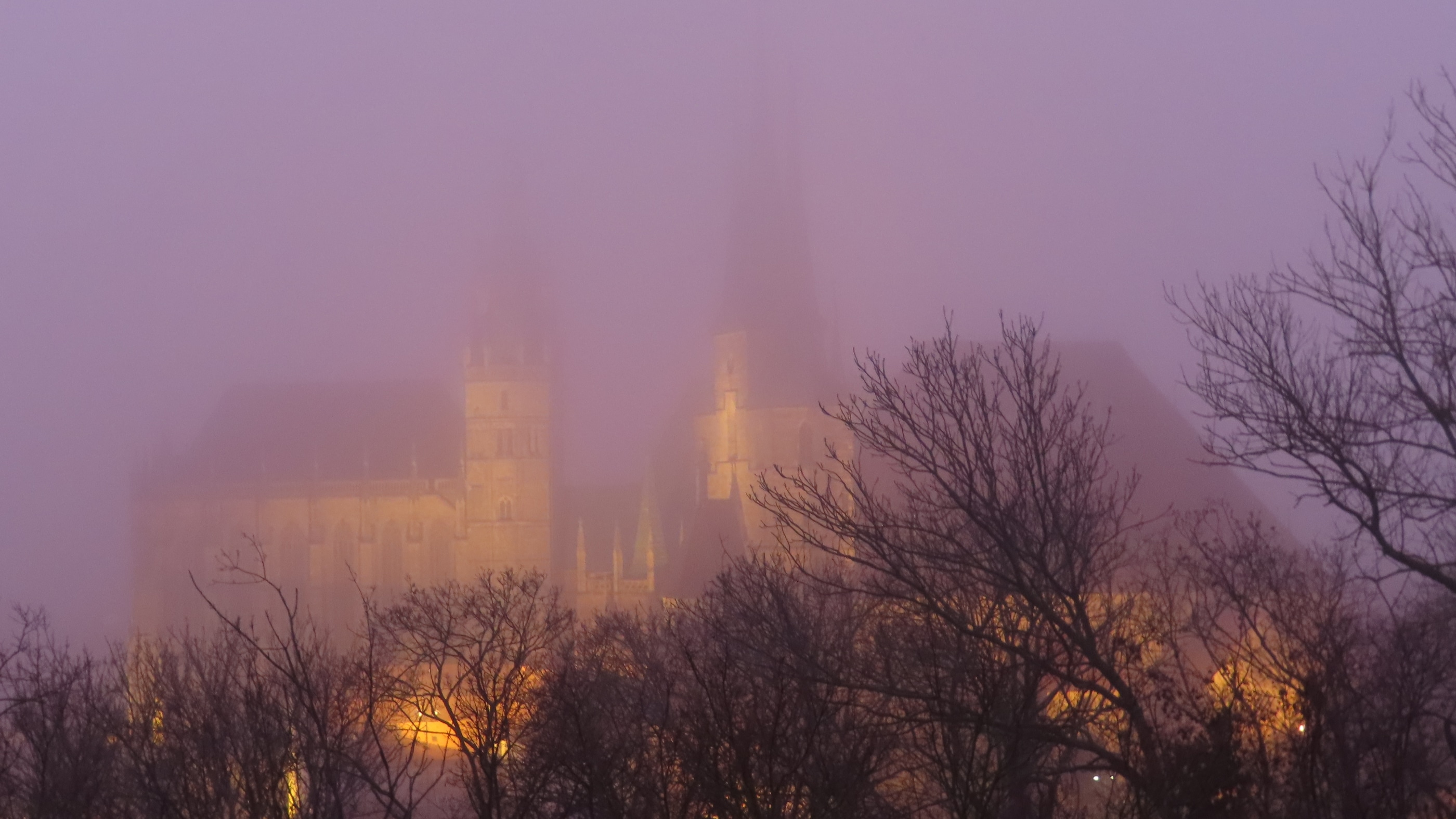
On foggy days, the two buildings can only be seen as faint silhouettes.